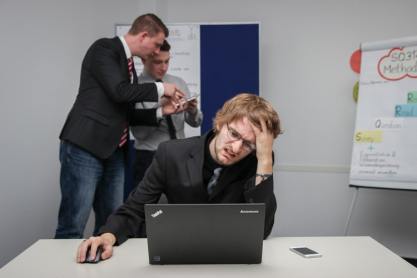
Tag Archives: health

Managing Neck Pain and Headaches Part 1

Neck pain and headaches are a very common issue in our society, and understanding the causes and prevention of them will go a long way to leading a healthy and pain free life. In this educational summary, we discuss some of the most common conditions we see in our office. Below we will discuss the following neck-related pain conditions.

  1. Upper Crossed Syndrome
  2. Headaches
  3. Neck Sprain/Strain
  4. Disc Pain
  5. Cervical Radiculopathy
  6. TMJ Dysfunction

This will be a multi part series, going over the list above.

Upper Crossed Syndrome

Upper Crossed Syndrome describes a type of common muscle imbalance. This occurs when the neck flexors and the middle back become weak while the pectoral muscles and the muscles at the base of the skull become tight.  This produces a familiar pain pattern at the base of the neck and the shoulders, as well as joint dysfunction at the base of the skull and shoulders.

The main physical causes of this condition are:

  • Desk job
  • Too much sitting
  • Driving long hours
  • Poor posture

However, with the proper education, you can protect yourself from many of these causes. The primary sufferers of this condition, especially chronic cases, often have poor posture while sitting at a desk for most of the day. A comorbid factor is a sedentary lifestyle with little physical activity. This poor sitting posture leads to a re-enforcement of the Upper Crossed Syndrome, and it is crucial that you arrange your workstation to facilitate a proper posture as best as possible.

The best way to combat this problem is, of course, to prevent it before it starts. If possible, minimize sitting for long periods of time and take frequent work breaks to take short walks around the office to reset your posture.

If the problem has already begun, Dr. Steve can teach you proper form and posture to prevent this problem in the future so that you are more mindful of the positions that can promote this problem. I am also trained in soft tissue techniques that will be able to relax your tight muscles, restore motion and reduce pain levels. There are also methods of rehabilitative exercise that can be taught to you to reverse any damage already done and prevent a progression of this condition, as well as instill healthy habits for you to employ for the rest of your life.

Headaches

Headaches come in many varieties, and nearly everyone experiences this type of pain at some point in their lives. The common symptom of all headaches is of course characterized by pain. Different types of headaches cause pain in different regions of the head and have unique pain sensations. Some portion of people experiencing headaches can be characterized as migraines. Migraines often feature symptoms such as nausea, vomiting or sensitivity to lights.

The physical causes of this condition are extremely numerous, but some of them are:

  • Allergies
  • Stress
  • Poor posture
  • Diet & exercise habits
  • Hormonal imbalance
  • Smoking

Since there are so many different types of headaches, as well as causes and symptoms, it is important to get a proper diagnosis so that you can better treat the cause. An assessment of your lifestyle habits is an effective way to diagnose common contributing factors that may be causing your headaches. For example, addressing your sleeping habits, making sure you get the proper amount of sleep and making sure you are getting restful sleep. A proper, healthy, balanced diet that is free of any substances that you may have a sensitivity to or may be a trigger for headaches is important for managing this condition as well. Posture and body habitus can be huge contributing factors and may be some of the simplest to diagnose and manage. Treatment such as soft tissue modalities as well as chiropractic adjustments coupled with posture analysis and correction can be a simple and effective way of managing headaches of this type.

Next week we will have more on this subject! In the meantime please call the office if you have neck pain or headaches that we can help you with!

How to Stop Muscle Wasting

The best way to stop muscle wasting is to lift weight and do some form of cardio vascular conditioning.

Which weight lifting exercise are best? They are called complex movements.

Here a list:

  • Squatting
  • Dead lift ( hip hinge)
  • Pushing movements( push ups and bench press)
  • Pulling movements( Lat Pull down and Pull ups)

Now you don’t have to be muscle bound to do these movements. However, doing these movements with some weight would help keep the muscle you have and possibly add some muscle.

Now you might be thinking you can’t squat because you may have bad knees or a bad back. Squatting is basically getting out of a chair. So start with that, getting out of chair 10 time is a row. Doing that a few times a day is a great way to start! You will not believe how sore you can get from this routine. Once you have done this for a few weeks move on to some thing harder. Goblet squats are the safest. Start with a light weight and just keep adding weight. It’s that easy.

Cost of Muscle Wasting after the age of 30: Top 10 List

Did you know that we lose 1-1.4% of muscle mass/year & 3% of our strength/year starting at the age of 40. Anyone who has turned 40 know this but in a different way.

Here’s some examples:

  • If I look at a cookie I gain weight
  • I don’t feel as strong as I once was
  • I’m more tired then I used to be.
  • I gain 5lbs a year with no major change in my diet
  • My clothes don’t seem to fit right
  • I don’t look good in the mirror
  • I get sore and tired from normal actives around the house
  • You see your Medical Doctor & they tell you that you have Arthritis & to just learn to live with it
  • The medical Doctor says it’s “Wear & tear” which is ironic because you’ve been sedentary. (Study after study shows exercise help arthritis and decease pain. Doing exercise correctly does not cause pain)
  • The MD say’s if you can’t live with it we’ll give you pills. You start taking NSAIDs which ⬆️ heart disease 30-40%
  • Now you’re getting desperate. Everyone  promises a quick fix – you reach for experimental things like stem cells. Treatments with side effects like steroids & you’re getting more & more depressed
  • Next you’re getting scanned (MRI/C.T).  Nobody has addressed the fact that you’re weak.  That you don’t have strength. All they are talking about are the tissues which are the victims
  • The next step is that they recommend surgery

How do you fix & reverse this?

Good question. It’s simple!

30m/day of general activity – choose whatever you like – hiking, waking the dog, swimming , biking or yoga & most importantly 2x/week resistance (strength) training

Come in or call the office and We could help you find the exercise that are the best for you.

Should Pain be Expected when Expecting?

Pregnancy is a span of time in which a woman’s body undergoes many changes, some changes being more comfortable than others.

Although we often picture pregnancy as a wonderful expectation in the growth of new life, the physical changes a woman’s body goes through can feel anything but miraculous. Over 50% of pregnant women report their biggest complaint during pregnancy is low back pain, sometimes lasting over 3 months!  Additionally, up to three-fourths of women will experience low back pain at some point during their pregnancy.1,2

Add to this pelvic girdle pain, which is experienced by up to 20% of women at some point during pregnancy,3, and it’s no wonder that pregnancy can be physically exhausting!

Although pain is usually experienced sometime between the fifth and seventh month of being pregnant, it can begin as soon as eight to twelve weeks after becoming pregnant.2

And as the fetus grows, a woman’s center of gravity changes to accommodate, shifting forward to accommodate for the growth of the baby.  The abdomen stretches, and the woman’s belly moves forward and out accordingly to increase in the baby’s weight and development; so, too, does the shift in gravity of a woman’s weight3 on her low back, pelvis, knees, ankles, and feet.

In fact, the thoracic (mid-back) and lumbar (low back) spine curvature can change during pregnancy, causing an increase in pain in the low back and pelvic regions.  This can also cause alterations to balance and gait patterns.3  Think of the pregnant “waddle” that some women do while walking, and you have an idea as to the changes that take place in the abdomen, low back, pelvis, and sacrum!

This can, and often does, place additional stress and strain on the joints in the low back and posterior pelvis, known as the lumbar and sacroiliac areas.  These postural changes lead to increased pain, muscle tightness, tenderness, and discomfort.2  Pregnancy can even lead to changes in the curvature of the woman’s spine.

Low back and pelvic pain can also be major deterrents in a woman who could, and would, be otherwise motivated to continue working and taking care of both herself and her home.  Pain has shown to influence pregnant women’s daily lives in the challenges they encounter concerning their physiological, psychological, occupational, and social functions.4

And it doesn’t always stop there.  Sometimes women can experience low back and pelvic region pain the year after birth, and even up to three years after labor and delivery.1,5  Pregnancy-related low back and pelvic pain, as well as post-partum mechanical spinal disorders, are not only common, but they can impede recovery, nursing, and caregiving – three very important components in taking care of the newborn after labor and delivery.5

How will a pregnant woman know if her pain is being caused by her pregnancy?  What is pregnancy pain like?  Some women describe it as a deep discomfort.   Others describe it as stabbing, continuous, recurrent, and intense.6  The discomfort can also vary in intensity; some days can be more difficult than others, and there may be times when the pregnant woman feels like even basic tasks are difficult to do.

Where might pregnancy-related pain be felt on the body?  For some, the pain occurs anteriorly, or in the front, by the pubic bone.  Others may feel discomfort directly at the low back above the gluteal area – sort of around the beltline.  And for others still, the pain also occurs between the hip bones and the gluteal fold. 

Sometimes this discomfort even travels down the back of the thigh to the knee and the calf6, or even down to their feet.2,7   Most women say that their pelvic and low back pain is more intense during pregnancy than after labor and delivery, and it is still physically limiting as it may cause a pregnant woman to withdraw from activities that she would normally gravitate toward, such as social interactions or work.6

Since pregnancy can drastically change a woman’s body in such a relatively small period of time with lasting effects, how can chiropractic care help with physical changes encountered during pregnancy, especially ones that contribute to pain?

While a chiropractor cannot help with changes in hormones that naturally occur with fetal growth, the resulting biomechanical changes that occur in a woman’s body during pregnancy can be lessened or alleviated by the help of a knowledgeable chiropractor.

A chiropractor who is well-versed in addressing pregnancy-related issues will be able to accurately assess, diagnose, and treat low back pain and pelvic girdle pain.

Some options for treatment include chiropractic spinal manipulation, soft tissue therapy, exercises, and ergonomic advice, as well as encouraging regular visits to her obstetrician.  Treatment could improve functional activities such as sitting, traveling comfortably in a car, walking, and more.3  And, addressing this discomfort sooner rather than later is preferred, especially if employment or maternity leave is a concern.  Low back pain is the most common cause of sick leave after delivery!7

Maintaining optimal function and reducing pain levels to more manageable levels are goals that should be discussed with a doctor of chiropractic as well as an OBGYN when it comes to pregnancy-related pain.2  A detailed history and clinical examination are essential for determining what biomechanical source is causing a pregnant woman’s low back or pelvic pain.6 

A knowledgeable chiropractor will be able to accurately assess changes in pelvic positioning, curvature changes in the upper and lower back, stress on the lower back including muscle tension and tightness in the lumbosacral area, and any radiating (shooting) pain that can travel from the low back into the legs or lower extremities.

A chiropractor can also help identify any areas of stiffness7 that may accumulate in weak areas of the body8, contributing to an increase in back pain during pregnancy.  This may be the case if poor posture, excessive standing, and bending over trigger or escalate any back and pelvic pain.

Low back pain and pelvic pain do not have to be an inevitable part of pregnancy.  If you are one of the 50%+ of pregnant women experiencing pain during your pregnancy, there are options for treatment available to help make your pregnancy more comfortable and productive!

Even as your body changes, a well-trained chiropractor will be able to give you conservative management options for your low back and pelvic pain.  Your doctor will work with your OB/GYN to make sure that your options for treatment are safe and effective.

References

  1. Yoo, H., Shin, D., and Song, M. (2015). Changes in the spinal curvature, degree of pain, balance ability, and gait ability according to pregnancy period in pregnant and nonpregnant women. J Phys Ther Sci. 2015 Jan; 27(1): 279–284.
  2. Montgomery, S.P. “Management of back pain during pregnancy.” (2009). Retrieved March 2020 from: https://www.spine-health.com/conditions/pregnancy-and-back-pain/management-back-pain-pregnancy
  3. Verstraete, V.H., Vanderstraeten, G., and Parewijck, W. (2013). Pelvic Girdle Pain during or after pregnancy: a review of recent evidence and a clinical care path proposal. Facts Views Vis Obgyn. 2013; 5(1): 33–43.
  4. Bernard, M., and Tuchin, P. (2016). Chiropractic management of pregnancy-related lumbopelvic pain: a case study. J Chiropr Med. 2016 Jun; 15(2): 129–133.
  5. Maiers, M., et al. (2018). Chiropractic in Global Health and wellbeing: a white paper describing the public health agenda of the World Federation of Chiropractic. Chiropr Man Therap. 2018; 26: 26.
  6. Katonis, P., et al. (2011). Pregnancy-related low back pain. Hippokratia. Jul-Sep; 15(3): 205–210.
  7. Sabino, J., and Grauer, J.N. (2008). Pregnancy and low back pain. Curr Rev Musculoskelet Med. 2008 Jun; 1(2): 137–141.
  8. “Back pain during pregnancy: causes, treatment and prevention.” American Pregnancy Association. Retrieved March 2020 from: https://americanpregnancy.org/pregnancy-health/back-pain-during-pregnancy

Working from home?

Are you working from home because of the Corona virus?

It’s a great feeling to accomplish work from the comfort of your kitchen table. While working from home can help avoid some of the headaches of a regular workplace — such as long commutes and inflexible work hours — it can still cause its own discomforts, especially if you’re using a laptop.

Imagine slaving over a hot keyboard from your kitchen table, doing work while sprawled on your bed, or hunched over a coffee table from your couch. It’s no wonder that  injuries and pain can happen just as commonly at home as it does from the workplace!

Working at home should be a comfortable, productive experience. With our training, we can identify habits and poor work setups that could cause you pain while you work at home. We help you so you can remain productive anywhere… even in your pajamas.

What do you imagine when you think of an office workspace? Many people envision designated cubicles, desks, coworkers, the proverbial water cooler, and computer setups with keyboards and mouses.

However, when you think of a home workspace, you may picture something else entirely: a kitchen table, or sitting in the familiar indentation on the couch or being flopped on a bed with a laptop and notebook nearby.

It is important to consider that working from the comfort of your home is not always comfortable. When we ask our patients that work from home to describe their workstation setup, very few tell us that they have a separate home office with a desk. 

Good ergonomics isn’t limited to the usual 9-to-5 workday. The same practices that can help avoid aches and pains at the workplace can be applied to your home office, too!

The most important tip that we can offer when working from home is to have a designated workstation with a comfortable office chair. Having the right setup will allow you to work productively, pain-free, and more easily while you work in the comfort of your home.

If so, I want to take a moment to look at your home office space.

If your workspace involves hunching over the coffee table with a too-low laptop and a sprawl of spreadsheets everywhere, then we need to talk!

Working at home should be comfortable, flexible, and beneficial to your time and energy. It shouldn’t be a source of pain.

If you’re not sure how to design a good office space within the comfort of your home, don’t worry. We can help.  Give our office a call, and our trained doctors of chiropractic can help review your workspace and make recommendations that work best for you and the space you have!

Laptops are fantastic for their lightweight portability. Unfortunately, the features that make laptops so versatile can also cause other issues!  Keyboard spacing, screen size and positioning, and pointing devices are all poorly designed when it comes to laptop computers, creating issues in your neck, upper back, lower back, and even hands. 

Furthermore, it is nearly impossible to have good posture when using a keyboard fixed to a laptop! Because the keyboard and the monitor are attached to each other, it is a challenge to sit ideally when working.

One tip is to have an adjustable office chair to get the proper body positioning and height when sitting, especially if your laptop rests on a surface that is not height adjustable. Put the laptop on a stand, so the screen remains at eye level to reduce neck strain, and if possible, use an attachable keyboard instead to give your wrists and forearms more support while typing.

For more tips, give our office a call.  We are well-versed in helping you prevent injuries, whether it’s at the workplace, your home office, or your local productive coffee shop!

Preventing Lower back pain Part 3

Body Preparation and Positioning

Sternum Up– Keeping the sternum up automatically sets the body into the good posture and maintains:

Neutral Spine: Maintaining good spinal alignment decreases the stress placed on the spine and discs.

Hip Hinging: Bending at the hips, and not the low back, decreases the stress placed on the low back and increases strength & power.

  1. Squating- The zone that will optimize lifting strength and injury reduction.

a. Bend your elbows at a 90-degree angle, and you are in the “Primary Power Zone.”

b. The area up to the shoulders and down to the hips is acceptable.

c. The more you can work in the “power zone” the less fatigue on your body

  • Abdominal Bracing- When all of your core muscles work together, a “Super Sti­ffness” occurs, and all three layers of the abdominal wall are activated to protect and stabilize the spine and discs.
  • Without bending forward, contract the abdominal muscles (like you are about the get punched in your gut – feel them tighten with one hand) and the buttock muscles (as if you are holding in a bowel movement). You will feel the lower back muscles contract (with the other hand) when you contract your abs and buttocks. Activities of Daily Living

Optimal Activities of Daily Living Considerations

The below images and descriptions were resourced from The Journal of Bodywork and Movement Therapies (2004) 8, 85–87 written by Craig Liebenson, DC

These are a sampling of some daily activities that you may encounter. We encourage you to practice and apply the body preparation and positioning described above. The Sternum Up, Power Zone and Abdominal Bracing should be utilized to protect and spare the spine.

Hip Hinge

  • Keep the spine upright by hinging from the hips as you bend your knees
  • Maintain all three points of contact as you move to an upright position

Going from Sit-to-Stand

  • Start in a seated position at the edge of your chair with your feet under your thighs before sitting up
  •  To initiate movement begin upward movement by using your hips and knees
  • To avoid strain to your back, keep your torso upright when rising from the chair.
A: Correct way B: Incorrect way

Picking up a bag of the ground

  • When picking up a bag from the ground, bend from the hips and knees.
  • Make sure to keep the back flat and keep lower back’s natural curve by keeping it curved forward while bending.
  • When lifting, initiate the movement by keeping the back flat while extending with the hips, and tightening the glutes.

Brushing your teeth

  • Keep your chest upright while brushing the teeth.
  • When you bend forward to rinse your brush or mouth bend from the hips, not from the waist.
  • Keep your chest lifted while you bend forward.

Changing a diaper

  • Before changing your baby ensure that you have a changing station that is the appropriate height.
  • If it is too low (below your waist), you will be forced to bend forward from the waist.
  • The correct height is approximately waist high and allows you to maneuver your baby without having to bend much.

Picking objects from ground

  • When lowering to pick up the object, bend from the knees and keep your chest lifted.
  • When lifting keep your spine upright by hinging from the hips and knees.
  • If the object is not directly in front of you, it is important to keep your chest lifted in front of you while keeping your lower back’s natural curve.
  • Avoid lifting immediately after sitting for a prolonged period.
A: incorrect B: correct

Lower back Pain Part 2

More common conditions

Lumbar Disc Disorders

The lumbar spine is made up of five bone segments called vertebrae. In between each vertebra are flexible intervertebral lumbar discs, which act as shock absorbers for the spine. The intervertebral discs are composed of two components, a tough outer ring of fibrous tissue called the annulus fibrosis, and a jelly-like center inside the annulus fibrosis called the nucleus pulposus. The structure is then held together by ligaments on the front and the back of the vertebrae. Additional support is provided by muscles of the trunk.

In most cases, lumbar disc disease is the result of a normal aging process called disc degeneration which causes structural changes in the normal disc. As we age, the disc begins to lose fluid and become dried out causing the disc to compress. This may lead to the breakdown and degeneration of tough outer ring of the disc (annulus fibrosis) allowing the inner core (nucleus pulposus), to bulge out. This is considered a bulging disc. This puts pressure on the outer ring of the disc, which may cause low back pain. As further degeneration of the disc continues, or with continued stress on the lumbar spine, the inner jelly-like core may rupture out from the outer ring causing a ruptured, or herniated, disk. Once the inner nucleus herniates through the outer ring, pain in the lower back may improve.

However, the fragmented disc material can inflame or put pressure on the spinal nerves leading to an increase in sciatic leg pain, weakness, numbness, or changes in sensation in one or both legs. Most disc herniations occur at the lower lumbar spine at L4-L5 and L5-S1 levels. Occasionally, severe trauma can cause a normal disc to herniate or may cause an already herniated disk to worsen.

Risk Factors of Lumbar Disc Disorders

  • Age and Gender – the highest incidence in men between the ages of 30 and 50.
  • Obesity – being overweight puts added stress on lumbar discs.
  • Sedentary lifestyle – lack of exercise and poor core body strength.
  • Smoking – Smoking decreases oxygen supply to the discs causing more rapid degeneration.
  • Improper lifting – using your back muscles instead of your legs to lift heavy objects. Twisting while lifting
  • Posture – hyperlordotic lumbar curvature, anterior pelvic tilt (lower cross syndrome).
  • Repetitive activities that strain your spine – jobs that require constant lifting, pulling, bending, or twisting.
  • Frequent driving – staying seated for long periods and the vibration from the car can put pressure on your discs.

History and Symptoms of Lumbar Disc Disorders

Lumbar disc disorders may include one or a combination of the following symptoms:

  • Intermittent or constant lower back pain and pain in the buttock,
  • Leg and foot pain, numbness or a tingling sensation in the leg and foot,
  • Weakness in the leg and foot
  • Decreased reflexes in the knee or ankle
  • Changes in bowel or bladder function.

The symptoms will vary depending on if and where the disc has herniated, and what spinal nerve root is affected. Leg pain is usually greater than low back pain with disc herniations and nerve root involvement. However, if there are only annular tears without herniation, the pain will be localized to the low back and buttock. The onset of pain can be sudden or gradual after an injury. Pain may follow heavy lifting, twisting, or straining activities or repetitive stress trauma. However, patients may not recall a prior injury or a precise time the condition began because it is often preceded by frequent episodes of less severe low back pain that usually resolved. Pain is usually characterized by sharp, shooting, or electrical pain that may be aggravated by movement, changing positions, sneezing, coughing, or prolonged sitting and standing. The pain is usually relieved with rest and a recumbent position.

Treatment of Lumbar Disc Disorders

Conservative care should be your first course of treatment to manage lumbar disc disorders, but treatment will depend on the clinical presentation, your age, overall health, and tolerance to therapies. With disc herniations, the first few days of care will focus on centralizing (reducing) leg pain, decreasing inflammation, and preventing further neurological loss by decompressing nerve root impingement and reducing the disc herniation. Osseous mobilization and manipulation and soft tissue therapy may be administered as tolerated. Home care will consist of pain-relief repetitive positional exercises and lumbar stabilization exercises. We will also educate you on ways to protect your lower back, positions to avoid, and how to manage activity. In most cases, bed rest will not be recommended as the sooner you are up and moving, the better the prognosis. Once pain and inflammation have decreased, we will continue working on lumbar stabilization and progress into proprioceptive training. We will evaluate muscle imbalances using posture and movement patterns with the goal of restoring good biomechanics and core body strength. Your home care will emphasize the progression of stabilization protocols and corrective exercises. If you fail to respond to conservative treatment, or in cases of severe neurological loss, a referral for a surgical consultation will be recommended.

Lumbar stenosis

This condition occurs when there is a narrowing of the spinal canal in the lumbar vertebrae (low back). Often this results in compression of the spinal cord, which can lead to pain, numbness, discomfort and radiating symptoms. What the mechanism of this is occurring is usually caused by the degenerative changes of aging. However, there are other causes.

The main physical causes of this condition are:

  • Degeneration of the lumbar spine
  • Lumbar disc herniation putting pressure on the spinal cord
  • Osteoporosis
  • Dwarfism (achondroplasia)
  • Tumor

Degeneration of the spinal column is inevitable with aging and may reflect normal changes in an aging spine. It does not necessarily always result in lumbar stenosis but is often the most common cause.

While it is difficult or impossible to combat normal aging of the spine, there are some habits and tips you can use to reduce this condition related to the other causes. Reduce your chances of a lumbar disc herniation by learning proper bending and lifting biomechanics by utilizing your lifting power from your legs and not your back. As far as osteoporosis goes, make sure you are meeting your recommended calcium intake as well as incorporating weight bearing activities into your exercise routine (lifting weights). Post-menopausal women tend to be more susceptible to this condition and should ensure they are doing everything they can to prevent osteoporosis.

Low Back Pain Part 1

Understanding and Preventing Your Low Back Pain

About 80% of Americans suffer debilitating low back pain at some point in their life. This fact is staggering, yet it doesn’t have to be this common. The key to staying out of this group of low back pain sufferers comes down to one word: Prevention.  If I had to choose one common problem amongst all low back pain sufferers, it would be bad low back position during common activities such as brushing your teeth, bending over, picking up a small child, exercising and sitting.

The lumbar spine, which is the lower part of the spine, is meant to have a natural curve to it that displaces the forces of gravity, weight, etc. evenly and minimally. When this natural curve is straightened, or reduced, the forces on the discs, muscles, and ligaments of the low back are significantly increased. For example, sitting without maintaining the natural curve increases the forces on those structures by 30%-40%!

There are many conditions that can be covered under the umbrella of low back pain, but in this article, we will cover the following conditions for the sake of this informational handout. The keys of prevention of low back pain are as follows:

  • Understand your symptoms and risk factors
  • Body Preparation and Positioning
  • Proper Activities of Daily Living
  • Corrective Exercises
  • Treatment Considerations

Common Low Back Conditions

Lumbar strains and sprains

A lumbar strain is when an injury occurs to the muscles of the low back. A sprain, on the other hand, is an injury to the ligaments or joints; both, however, have similar pain and symptom patterns. When these muscles or ligaments become injured, it can lead to dysfunctional movements, and cause instability in the spine. Patients suffering from this diagnosis often have pain when attempting to walk, sit, exercise and can even occur during sleep.

The main physical causes of this condition are:

  • Overexertion
  • Falls
  • Poor movement mechanics
  • Poor posture
  • Heavy lifting

However, with proper education, you can protect yourself from many of these causes. The primary sufferers of this condition, especially chronic cases, often are in poor physical condition with weak stabilizing muscles. A comorbid factor of this condition is often a desk job that involves sitting for most of the day. This type of patient usually has poor sitting posture, which can lead to a weakening of your spinal erectors and destabilize the spine, contributing to the condition. The importance of a strong core and training your spinal muscles cannot be overstated.

In cases where the injury stems from a problem related to overuse, poor posture or improper exercise, there are steps that can be taken to help avoid these injuries from happening. Proper instruction about your postural habits can reduce the detrimental effects of sitting on the spine, as well as education about correct lifting form can reduce these episodes of low back pain and help you build a healthy spine.

If you are having back pain or want some guidance on how to prevent back pain please call the office. We will be happy to help!

Mattress buying Guide

Buying a mattress can be quite a daunting task. One of the most frequent questions I get is which mattress is the best to purchase. This blog post is designed to help you make a better decision.

There is an endless amount of options, materials, and features available making it difficult to determine which mattress is right for you.  The average adult sleeps for eight hours a night; this means that you could be spending up to a third of life lying on your mattress, making this purchase all the more important.

The first question to ask yourself is do you need a new mattress? The average lifespan of a mattress is 5-10 years. Many manufacturers will have warranties that extend beyond the 10-year range, but for most the 8-year mark is when it is time to look at replacing the mattress. However, if you wake up every morning feeling sore or with back pain that tends to resolve within 15-30 minutes of being awake, this could indicate that you should be looking to replace your current mattress.

Unfortunately, there is not a one size fits all for mattresses. Everybody has a different body type, a different way to sleep, and experiences comfort differently. Some people will require a softer mattress and others will prefer a firmer mattress. In the end, this is personal preference and very subjective. We will provide you with some general guidelines to consider when testing out mattresses but there is no replacement for going to the store and testing out different options yourself. We recommend when testing mattresses, you lie on them for at least 10 minutes as this will give you a much clearer indication to its comfort level and how your body responds to its level of support.

The Ten Minute Test

What is the ten minute test? Can you lie on the mattress for ten minutes comfortably without moving? How can you sleep on the mattress for 6-8 hours a night if you can’t lie comfortably for ten minutes? If you can’t your body is telling you something.

Another factor to consider when purchasing a mattress is whether your purchase has a comfort guarantee. Even after doing all your due diligence and testing it in the store you may notice after a couple night’s sleep you will realize the mattress you selected simply is not right for you. Some companies offer a comfort guarantee in the event you decide you are not satisfied with your mattress (typically within 30 or 90 day periods). Every guarantee is different, and some have fees associated with the return. Therefore it is important to understand the fine print associated with any specific guarantee. This guarantee will protect your purchase and ensure that you will not be spending the next eight years waking up with a sore back from sleeping on the wrong mattress.

It is also important to understand the cost associated with mattresses. Prices vary widely and range anywhere from $200 to $5000 +. Unfortunately, price does not always correlate with quality or the right mattress for you. It is recommended that you budget at least $800-1000 for your new mattress. This budget should be enough to purchase a quality mattress that fits your needs but also one that is built to last you the 8-10-year range.

Once you determine your budget the next step is to figure out which style mattress best suits your needs.

Innerspring mattress: The innerspring mattress is also known as a coil mattress. It is arguably the most traditional style of the mattress and currently one of the most common mattresses on the market. It is typically a firmer mattress style, and the individual coils can offer quality support for your back. The “coil counts” on innerspring mattresses tend to indicate better comfort and support as the number increases. With that in mind as long as you have a minimum coil count of 400 the difference in higher count mattresses is typically nominal.

Memory foam mattress: Memory foam mattresses mold to the contour of your body better than any other type of mattress.  This results in fewer pressure points when you are sleeping. These mattresses tend to be by and large a softer mattress, but that still depends on the model you purchase as some brands make firmer memory foam models.  It can also serve to absorb movement, helping decrease the disturbance of sleeping with a partner. One of the main drawbacks of a memory foam mattress is that it tends to absorb heat and can be a very hot mattress to sleep on.

Latex Mattress:  Latex mattresses tend to be firmer, with bouncy support throughout the mattress. One of the main features of a latex mattress is that the material remains cooler as the latex foam does not absorb heat the same way that memory foam does.  Latex mattresses are often considered to be a good option for a patient suffering low back pain due to their combination of softness and support. A latex mattress will also provide the same feeling of a foam surface similar to the memory foam however it the contouring of a memory foam mattress.

Pillow Top: A pillow top mattresses do not indicate a type of mattress rather, it describes the addition of soft layer sewn on top of the mattress. They can be any one of innerspring, latex or memory foam mattresses underneath the pillow top layer. This results in a softer, more cushioned top surface with a firmer base of support.

These are the main categories of mattresses, but there are many other variations on the market. One final style to consider is an adjustable mattress. These mattresses can change the firmness from firm to soft at the touch of a button. This provides you with the ability to try different levels of firmness until you find the right amount for you. Many of these beds also have adjustable bed angles which can further customize your sleep experience.

Firm or Soft mattress?

Now that we’ve discussed what styles of mattresses exist, the next step is determining whether you need a firmer or a softer mattress. Everyone’s preference is different however there are several factors that we can look at to help guide our decision.

The size of the individual sleeping on the mattress is the first important factor. If you are a lighter person, then a pillow top mattress is likely not a good fit. To maximize the pillow top, you must be heavy enough to compress the top layer to be supported by the underlying material of the mattress.

If you are a lighter individual, you will look for a softer top layer. That way you can benefit from the lower supportive layer of the mattress. Typically, the denser the top layer, the more uncomfortable a lighter person will be.

If you are a heavier individual, then you will aim for a denser top layer and a firmer mattress. This is the case where a pillow top mattress may be a good option. For heavier people who are still looking for that soft feel while they sleep, they can look at a pillow top mattress, which offers the soft cushion with a firmer coil supporting them under the top layer.

Side sleepers, Back sleepers, Belly sleepers

The next important factor in choosing your mattress style is your sleeping style. Everyone sleeps differently, from side sleepers, to back sleepers, to belly sleepers (although this is not recommended for the health of your back) everyone sleeps in a different position.

For a side sleeper, it is typically recommended that you look for a soft to the medium mattress. The mattress must be soft enough for you to sink in but also offer enough underlying support that prevents having pressure points in the back and neck. Your body has curves, and you want your new mattress to support all those curves while you sleep to eliminate any risk of soreness when you wake up.

Back sleepers, on the other hand, tend to require a medium to a firm mattress. When sleeping on your back, it is essential that the mattress offers an adequate amount of support and firmness or you will run the risk of sinking in and sleeping in a poor posture. The worse your sleeping posture is the increased likelihood that you will wake up with back pain.

Finally, stomach sleepers tend to need the most support. This sleeping position puts the spine in a vulnerable position as the slightest angle from sinking into the mattress can lead to sleeping associated back pain. Therefore, if you must sleep on your stomach, aim for a firm mattress that avoids any pressure points. If you are a stomach sleeper who constantly wakes up with back pain, we recommend trying to slowly change your sleep posture to your side or back. Although, it is never easy to make such a change often this is the best option for the long-term care for your back.

These are simple guidelines that you can use to help decide on your new mattress purchase, but it is not a replacement for physically trying the mattress yourself. Comfort is always subjective, and you will not know what your style preference is until you try one for yourself.  Remember to take your time and test as many options as possible, not only is it a financial investment but it is also an investment in your long-term health and well-being.

https://www.mattressnerd.com/mattress-buying-guide/ https://sleepopolis.com/guides/how-to-choose-a-mattress/ https://www.consumerreports.org/cro/mattresses/buying-guide/index.htm

Lifestyle factors can effect mortality and life expectancy

Who doesn’t want to live longer? I bet almost everyone would take the opportunity to live longer if they could. Did you know adopting a healthy lifestyle could substantially reduce premature mortality and prolong life expectancy in US adults?

The things we do every day can influence how long we live. So do we have to do some bio hacking or a super detox to live longer? Fortunately it much easier then that. Simple things can improve our health and make us live longer. So what are they?

  • Never smoking ( that was easy right?)
  • Regular physical activity! This can include walking or lifting weight.
  • Healthy diet. Mom said eat your vegetables and you’ll be healthy. She was right. Maintain a normal BMI. Obesity will lower how long you can live.
  • Moderate alcohol consumption. Less consumption the greater improvement in health.

Doing these thing can prolong life expectancy at age 50 years by 14.0 and 12.2 years for female and male US adults

See you don’t have to become a vegan or run ultra marathons to improve your health and live longer. The one thing I would add is make sure you are sleeping 7-8 hours a day. Lack of sleep can effect you negatively.

If you need help jump starting a healthier lifestyle call the office. I can help!

Here’s the study. Lots of great graphs and details. https://www.ahajournals.org/doi/pdf/10.1161/CIRCULATIONAHA.117.032047 Conclusion of the study: Adopting a healthy lifestyle could substantially reduce premature mortality and prolong life expectancy in US adults.